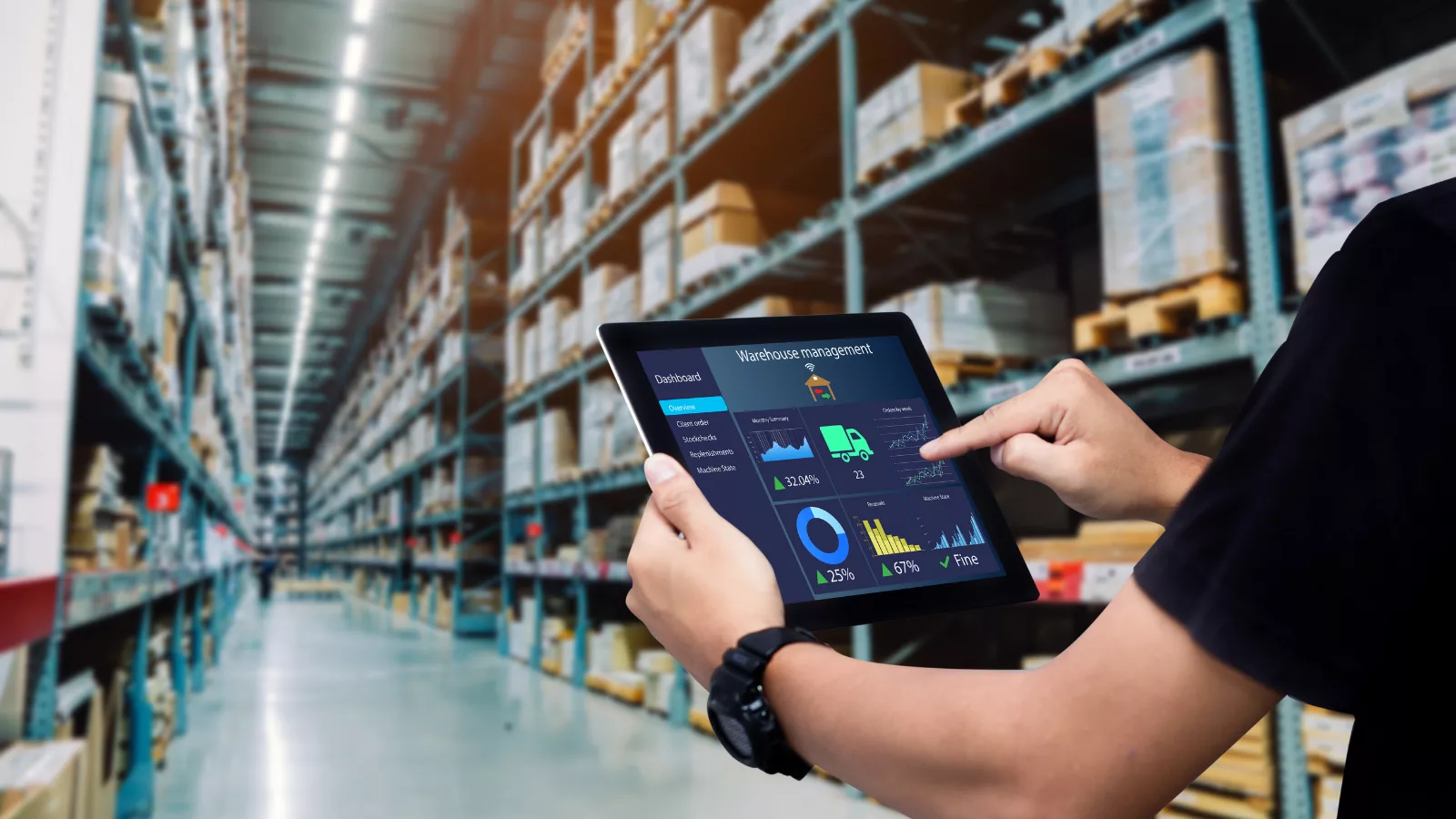
An ecommerce warehouse is a facility used to store inventory before it's sold online, and, in its modern, outsourced form, to pick, pack, and ship that inventory once an order comes in. In India, ecommerce warehouse fulfillment services have moved from a back-office necessity to a growth lever, as brands compete on same-day and next-day delivery across Tier 1, 2, and 3 cities.
If you sell online in India, your warehouse is no longer just a storage room, it's the biggest variable between a customer placing an order and coming back for a second one.
What Is an Ecommerce Warehouse?
An ecommerce warehouse is a dedicated facility where online sellers store unsold inventory, from raw stock waiting to be listed, to fast-moving SKUs ready for dispatch. The function has expanded considerably; a modern ecommerce warehouse typically combines:
- Racking and bin systems organised for pick efficiency, not just bulk storage
- A warehouse management system (WMS) that tracks stock in real time across every unit
- Dock access for inbound receiving and outbound dispatch
- Packing stations, quality checks, and sometimes light assembly or kitting
- Integration with courier and marketplace systems so orders sync automatically
For small D2C sellers, this might be a garage or spare room. For a scaling brand, it's a purpose-built or leased facility, either run in-house or handed to a specialist offering ecommerce fulfillment services.
Not sure whether your current setup counts as a "real" warehousing and fulfilment operation or just extra storage? Path Logicity offers the top warehousing solution in the country. Talk to our experts today!
Ecommerce Warehouse vs. Fulfilment Centre vs. Distribution Centre
This is where most sellers get confused, and it's worth being precise, because the three terms get used interchangeably but aren't the same thing.
| Facility | Core Function | Does it ship to end customers? |
|---|---|---|
| Ecommerce Warehouse | Stores inventory before it's sold | Not necessarily |
| Fulfilment Centre | Stores inventory and handles pick, pack, ship for individual customer orders | Yes |
| Distribution Centre | Receives bulk stock and redistributes it to other warehouses, stores, or hubs | No (moves stock onward, not to consumers) |
A warehouse is a storage function. A fulfilment centre is a warehouse plus an order-execution engine layered on top. A distribution centre sits further upstream, moving bulk inventory between supply chain nodes rather than to a customer's door. When Indian sellers search "ecommerce fulfilment services," they usually mean what a fulfilment centre does: storage plus the full order-to-doorstep process.
Why Ecommerce Warehousing Matters More in India Right Now
India's warehousing story right now is really an e-commerce story. India's e-commerce warehousing market was valued at roughly USD 8.5 billion in 2024 and is projected to climb to USD 35.6 billion by 2033, growing at a CAGR of 17.28%, driven by rising online shopping, same-day delivery expectations, and city-embedded fulfilment nodes. Notably, quick commerce is pushing companies to invest in strategically located micro-warehouses, or dark stores, built specifically to serve online orders, reshaping what "warehouse space" means in Indian metros.
What this means practically for Indian sellers:
- Warehouse location now matters almost as much as price, proximity to demand clusters shortens delivery windows
- Automation and WMS quality are becoming baseline expectations, not premium add-ons
- Sellers relying on a single city warehouse are increasingly at a structural disadvantage against multi-node networks
- Reverse logistics (returns handling) is now a core warehousing function, not an afterthought
If your current warehouse footprint hasn't kept pace with where your customers actually are, that gap shows up in your delivery timelines. Looking for alternatives to your existing space? Talk to our experts today!
What Good Ecommerce Storage Solutions Actually Include
Not every facility calling itself a "warehouse" delivers the same operational value. A capable ecommerce storage solution should offer:
- Real-time inventory visibility: You should know exact stock levels per SKU, per location, at any moment
- Multi-channel order sync: Orders from your website, Amazon, Flipkart, and quick commerce apps should route into one system
- Scalable capacity: Space that flexes with seasonal demand spikes (festive season in India is a genuine stress test)
- Quality control checkpoints: Inspection before packing reduces returns and negative reviews
- Returns processing infrastructure: Reverse logistics handled inside the same facility, not bolted on separately
- Transparent SLAs: Clear, contractual commitments on picking time, dispatch time, and accuracy rate
This is the practical dividing line between storing inventory and running fulfilment. A facility with all six isn't a warehouse anymore, it's a fulfilment centre.
In-House vs. Outsourced Warehousing: The Real Trade-off
Every growing ecommerce seller in India eventually faces this decision, and it's rarely as simple as "outsourcing is cheaper."
Running your own warehouse gives you full control over process and stock, but it means carrying fixed real estate costs, hiring and training staff, investing in a WMS, and absorbing idle capacity during slow months. For most sellers below a certain order volume, that fixed cost structure doesn't pay for itself.
Outsourcing to a partner offering warehouse fulfillment services via a large MMLP flips the cost structure from fixed to variable, you pay largely based on volume, gain multi-city storage without separate leases, and inherit a working WMS and trained staff from day one. The trade-off is less direct control and dependency on the partner's SLAs holding up under pressure. Below a certain scale, outsourcing almost always wins on unit economics; above it, a hybrid model, owned warehouse in your top market, outsourced elsewhere, often makes the most sense.
How to Choose an Ecommerce Fulfillment Services Partner in India
Evaluating ecommerce fulfillment services India comes down to a few criteria that separate operators worth signing with from ones that will quietly hurt your delivery metrics:
Warehouse network density
How many cities do they actually operate in, versus how many do they claim to serve through courier partners
Technology integration
Does their WMS talk to your storefront and marketplaces natively, or does it require manual reconciliation
Accuracy and SLA track record
Ask for real fulfilment accuracy numbers, not marketing claims
Returns handling capability
Indian ecommerce return rates are meaningfully higher than global averages, so this isn't optional
Scalability during peak season
Can they absorb a 3-5x order spike during festive sales without breaking SLAs
Pricing transparency
Storage fees, pick-and-pack fees, and per-order costs should be clear upfront, not buried
Why Path Logicity Is the Right Ecommerce Warehousing Partner
Choosing between an ecommerce warehouse and a full fulfilment partner comes down to whether you manage operational complexity yourself or hand it to a team built for it. Path Logicity operates as exactly that kind of partner, combining strategically located warehousing with the technology, process discipline, and reverse-logistics capability Indian ecommerce brands need to compete on delivery speed, without carrying the fixed cost of running facilities in-house.
Path Logicity operates one of India's largest Multimodal Logistics Park, a 400-acre facility near Bengaluru, offering Grade-A warehousing alongside a dedicated ICD zone and six railway sidings. Backed by nearly three decades of infrastructure expertise from Prakash Asphaltings & Toll Highways, the park integrates road, rail, and future air freight connectivity from a single address, giving ecommerce sellers structural cost and speed advantages that a standalone warehouse can't replicate.
If your warehousing setup is holding back your delivery promise, it's worth a conversation with Path Logicity before your next peak season. Book a consulting call today!
Frequently Asked Questions
What is an ecommerce warehouse?
An ecommerce warehouse is a facility used to store inventory that has been ordered or manufactured but not yet sold or shipped to a customer. It includes storage infrastructure like racking and inventory tracking systems, and can range from a small room for early-stage sellers to a large, automated facility for high-volume brands.
What is the difference between an ecommerce warehouse and a fulfilment centre?
An ecommerce warehouse only stores inventory. A fulfilment centre stores inventory and also handles the full order execution process, picking, packing, and shipping orders directly to end customers. Most services marketed as "fulfilment" in India function as fulfilment centres rather than plain warehouses.
Who are the best ecommerce fulfilment companies in India?
The right choice depends less on brand recognition and more on warehouse location density in your demand markets, technology integration with your sales channels, and proven SLA performance, which is why evaluating a partner like Path Logicity against your actual order data matters more than going by name recognition alone.
Do small ecommerce sellers in India need a dedicated warehouse?
Not immediately. Early-stage sellers often manage with home-based storage. As order volume grows and delivery-speed expectations rise, most transition to a leased facility or an outsourced fulfilment partner, since accurate, fast dispatch becomes difficult to manage manually at scale.
How much does ecommerce warehousing cost in India?
Costs vary by city, storage volume, and whether you choose in-house or outsourced warehousing. Outsourced services typically charge for storage space plus a per-order pick-and-pack fee, shifting costs from fixed to variable, more predictable for sellers with fluctuating order volumes.